1. What decision?
Name the scientific, operational, vendor, or executive decision the work should improve.
Founder Method
SignalForge starts by making the decision, evidence chain, hidden steps, ownership, and review burden visible. Then the work becomes fundable, fixable, testable, or stoppable.
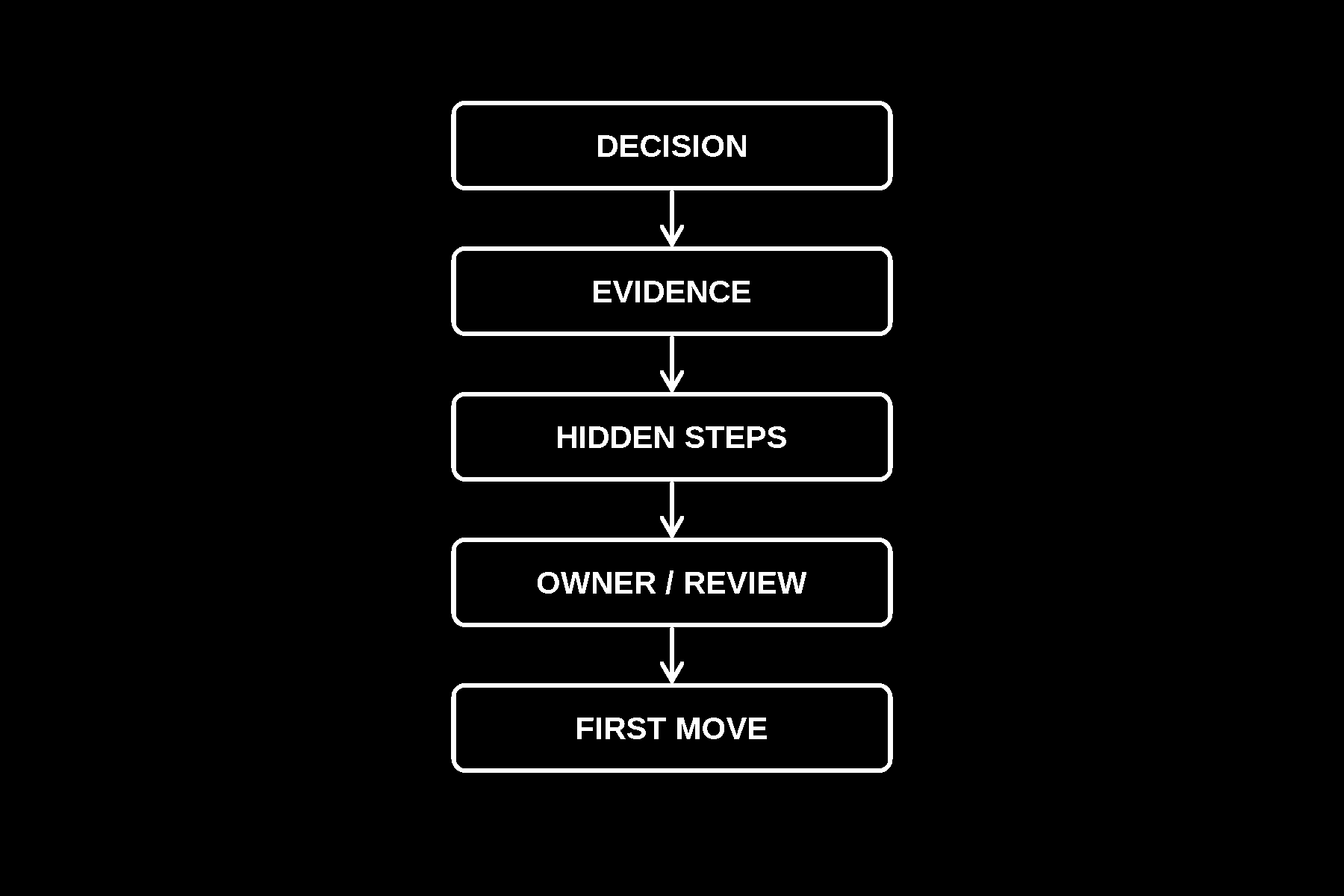
Operating sequence
Name the scientific, operational, vendor, or executive decision the work should improve.
Identify the records, files, metadata, documents, assumptions, and expert judgment that support the decision today.
Expose handoffs, permissions, data movement, manual workarounds, and unspoken scientific assumptions.
Clarify who can approve, reject, escalate, caveat, or act on the output when the system enters real work.
Decide whether to Scan, Pilot, Run, repair the substrate, diligence a vendor, or stop.
Experience based example
SignalForge’s founder built an end to end, cloud enabled data pipeline for high volume candidate vaccine virus sequencing work at a large vaccine manufacturer. The lesson was not simply cloud compute. It was that scientific use appeared when instrument output, database records, object storage, processing state, compute, review, and downstream results formed one inspectable chain.
Operating philosophy
The method comes from years of seeing drug discovery, assay, omics, platform, vendor, and data science work fail earlier than people expect. Results separate from context. Files are treated as evidence without provenance. Vendor demos are evaluated before the buyer knows what the system must prove. AI pilots launch before the decision, owner, review path, and stop criteria are defined.
SignalForge is built to slow that moment down just enough to make the next move defensible.
Scientific formation
Will trained in medicinal chemistry inside a genetics/immunology environment built around genome engineers, medicinal chemists, and an army of skeptics. This is not about prestige. It is about discipline, mechanism, controls, and the rule that a well told story is not evidence until the chain holds up to inspection.
That posture shapes how SignalForge engages. Whether the artifact is a model output, a vendor claim, an omics figure, a RAG citation, or an executive memo, fluency and visual polish do not earn trust on their own. Trust comes from an evidence path that survives challenge.
The decision stack
What decision is this supposed to improve?
Which records, files, experiments, claims, and judgments support it?
Which metadata, provenance, controls, caveats, and failure modes must survive?
Where does the work actually happen, and what hidden burden exists?
Who reviews, rejects, escalates, approves, or acts?
Fund, fix, pilot, buy, scale, defer, or stop.
What happens next
Bring the ambiguity. SignalForge will help determine whether the right next move is definition, substrate repair, vendor diligence, a bounded pilot, or no project.