Problem framing
Translate broad AI ambition into a specific decision, workflow, user, owner, and desired end state.
AI Readiness Scan
The AI Readiness Scan is a 1-2 week diagnostic for life sciences teams that need to decide what to fund, fix, or stop before AI momentum becomes expensive.
SignalForge inspects the decision target, evidence chain, data condition, workflow reality, ownership model, vendor assumptions, and review burden. The output is a practical recommendation: what is ready, what is fragile, what needs repair, and which bounded pilot, if any, deserves funding.
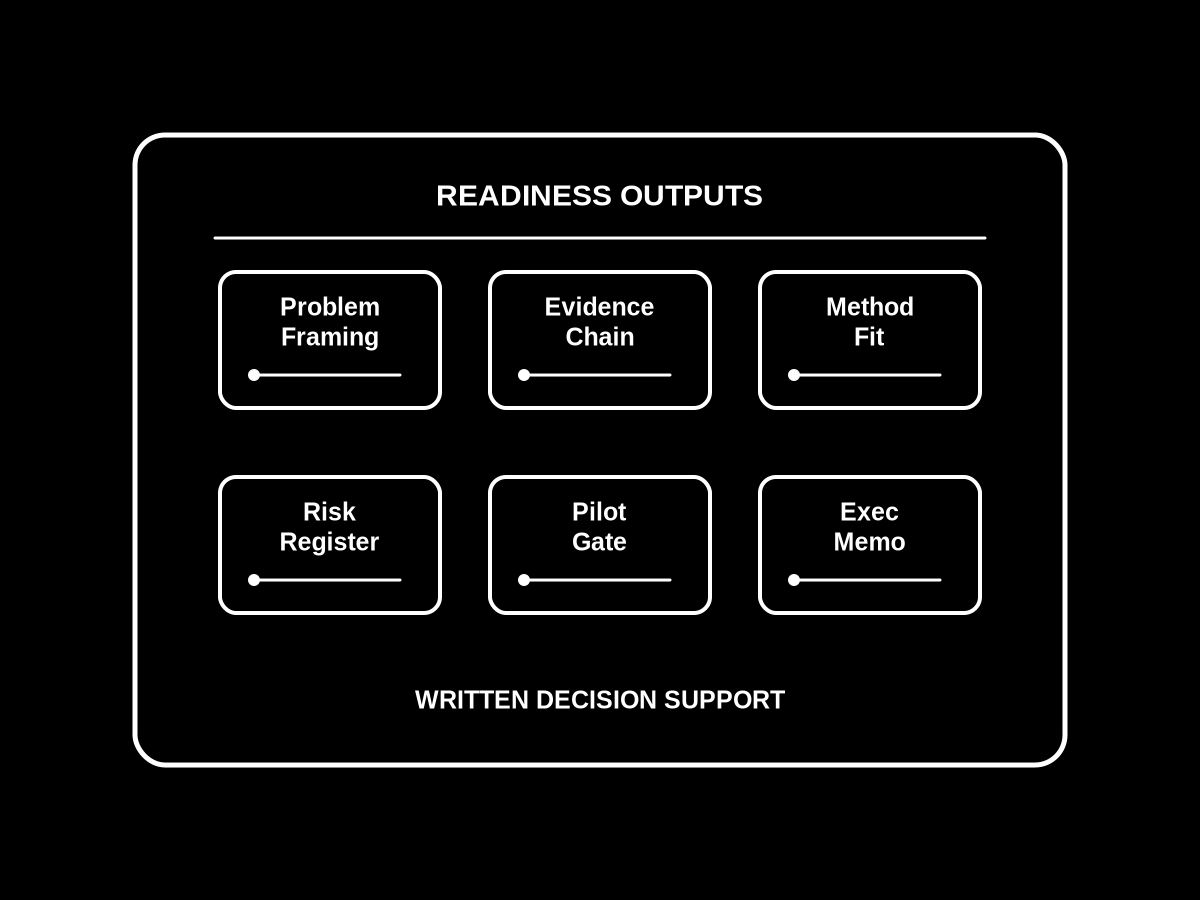
What you buy
A SignalForge Scan is not a strategy deck, implementation sprint, model build, vendor resale, or open-ended advisory conversation. It is a structured outside review of the decision, evidence chain, data condition, workflow reality, ownership model, review burden, and smallest defensible next move.
Typical output
Low-friction first step
The first conversation does not require broad data access, confidential files, or a polished internal brief. Workflow notes, public materials, schema excerpts, screenshots, vendor summaries, anonymized examples, or a plain-language description of what is stuck are enough to determine whether SignalForge can help.
Translate broad AI ambition into a specific decision, workflow, user, owner, and desired end state.
Inspect the data, documents, assays, omics outputs, computational artifacts, vendor inputs, and assumptions that would have to support the workflow.
Separate use cases ready for a pilot from those needing metadata, repository, governance, review, or process repair first.
Define the smallest defensible next move: pilot, repair, buy, defer, keep manual, or stop.
What leadership receives
A plain language description of the decision or workflow the AI effort is supposed to improve.
A map of the records, handoffs, systems, people, and assumptions that support the decision today.
A concise view of data gaps, metadata gaps, workflow gaps, ownership gaps, vendor risks, and review burdens.
A bounded first project with success criteria, stop criteria, required inputs, review gates, owner accountability, and expected decision value.
A direct recommendation on what to fund, fix, test, pause, reject, or monitor.
Best fit triggers
What happens next
Send the use case, evidence sources, and decision your team is trying to improve. SignalForge will help determine whether it is ready for a Scan, needs narrower framing, or should not become an AI project yet.