SignalForge separates product, model, workflow, security, validation, integration, and commercial claims for testing.
Playbook 11
AI Vendor Claim Diligence
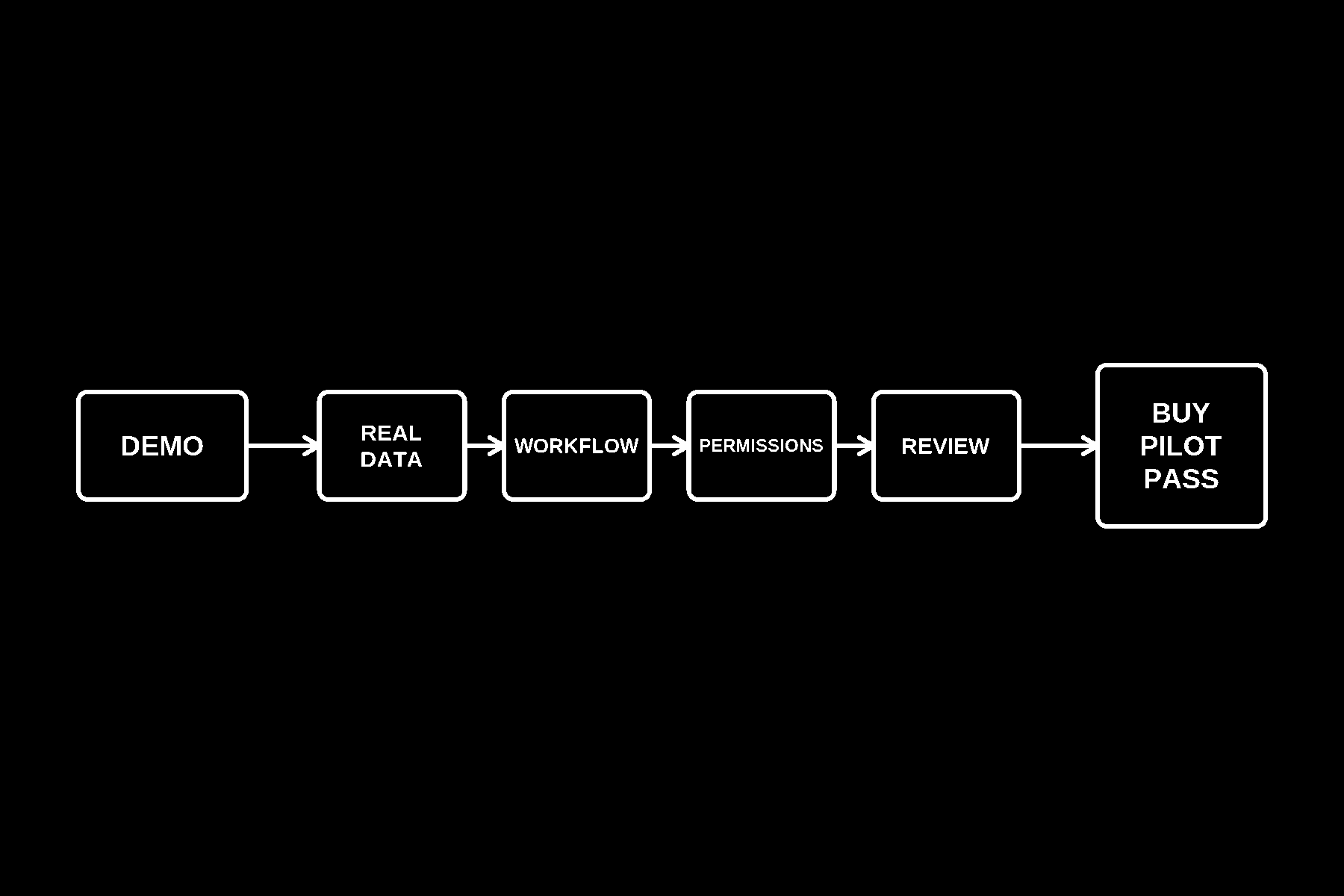
An AI vendor demo looks credible, but no one knows whether the claim survives the company’s real data, metadata, workflows, permissions, review burden, and decision context.
The polished demo trap
What not to buy on.
Evaluating the demo, not the operating burden, is an expensive mistake. An AI tool may impress in controlled demos but fail in your environment due to missing metadata, unowned integration, permission issues, or unclear decision impact.
Why demos mislead
The gap the demo hides.
AI vendor evaluations often over-index on product appearance and under-inspect buyer responsibilities for sustained operation. Demos, accurate under curated conditions, do not prove system efficacy against your varied internal data like inconsistent ELN entries or undocumented omics changes.
Demos often hide critical dependencies. Metadata, workflow integration, permissioning, review/validation expectations, and ownership are all vital. Vendor diligence must ask what must be true for claims to hold, who performs the work, what evidence proves it, what decision improves, and what post-contract burden remains.
Buyer controlled diligence
How SignalForge tests the claim.
SignalForge evaluates AI vendor claims as operating claims, translating vendor language into testable buyer requirements.
For a Scan, SignalForge identifies assumptions about data access, metadata, security, validation, and maintenance for a given claim. For a Pilot, we design a bounded, buyer-controlled test using representative evidence, realistic constraints, and measurable acceptance criteria. For Run, SignalForge advises on continuous performance, risk tracking, and cost. We help buyers ask precise questions, structure evidence, expose hidden burdens, and make informed decisions.
Claim pressure points
Where the diligence focuses.
Diligence inspects whether demo evidence matches your real ELNs, assay packets, omics outputs, SOPs, and CRO reports.
SignalForge identifies claims dependent on study IDs, sample lineage, reagent lots, controls, time points, or QC flags.
Review maps where the tool enters workflows, who uses it, changes required, and if output reaches actual decision points.
SignalForge inspects if the tool respects project boundaries, confidential materials, access restrictions, and audit needs.
Diligence examines if "human review" is an operational step with named reviewers, criteria, escalation paths, and observable evidence.
SignalForge inspects logging for prompts, sources, model outputs, user actions, configuration changes, failures, and decision use.
Review estimates work needed from IT, informatics, data engineering, scientists, platform owners, security, and legal.
SignalForge inspects ownership of data connections, prompts, workflows, model versions, metadata, permissions, and training updates.
Diligence tests if the tool improves a key decision like target advancement, assay redesign, or portfolio prioritization.
A diligence memo
What a Scan delivers.
An AI Vendor Claim Diligence Scan produces a concise vendor claim map, delineating facts from assumptions, dependencies, and untested assertions.
Vendor claim map
Defines intended use case, representative evidence, required metadata, workflow constraints, permission boundaries, review gates, and decision outcomes.
Buyer side requirements brief
Maps likely work across data prep, system integration, scientific review, security, procurement, operating ownership, and maintenance.
Implementation burden map
Tailored diligence questions for procurement, BD, strategy, AI, platform, R&D, legal, IT, and security teams.
Diligence question set
Recommends proceeding to procurement, requesting more evidence, renegotiating scope, running a pilot, deferring, or rejecting.
Pilot readiness recommendation
Executive decision language detailing knowns, unknowns, acceptable risks, avoidable spend, and next decision steps.
A bounded vendor trial
What a Pilot would prove.
A bounded 2-8 week pilot tests a vendor’s tool against a real target, asset, or workflow using buyer-selected evidence, including edge cases. Success criteria focus on the tool's resilience, accuracy, workflow fit, and impact on a critical leadership decision.
Buy, negotiate, or pass
The procurement fork.
The core decision is the next action, not vendor preference. A strong claim may warrant procurement if evidence is representative, integration burden understood, ownership clear, and a meaningful decision improves. Unproven claims require a buyer-controlled pilot. Renegotiation is needed if value is real but terms misaligned. Deferral or rejection prevents wasted resources on weak claims or unaddressed prerequisites.
This disciplined approach avoids premature buying or casual rejection. The fork dictates: buy if operating burden is acceptable, pilot if plausible but unproven, renegotiate if value exists but terms are wrong, defer if prerequisites are missing, and reject if the claim fails.
Vendor diligence FAQ
What procurement asks.
Is this only for large enterprise procurement?
No. Smaller biotechs, platform companies, or CROs often need this more due to scarce resources. Diligence scales to decision size.
Does SignalForge choose the vendor for us?
SignalForge structures evidence for the recommendation. The goal is to determine which claim survives your data, workflow, ownership, review, and decision constraints.
What if the vendor is already selected?
This playbook still applies. Focus areas become narrowing implementation, defining acceptance criteria, exposing dependencies, clarifying ownership, and preventing an unfocused operational burden.
Send this for the screen
Vendor claim material to share.
Send SignalForge the vendor deck, demo notes, proposed use case, procurement timeline, security materials, sample claims, draft contract, and a short description of the leadership decision. Useful supporting materials include document types, metadata dictionaries, assay packet examples, omics workflow summaries, current review workflows, and internal rationale.