Task inventory and handoff patterns
Playbook 17
Frontier Model Preparedness for Life Sciences
Frontier model capability advances faster than an organization’s operating model.
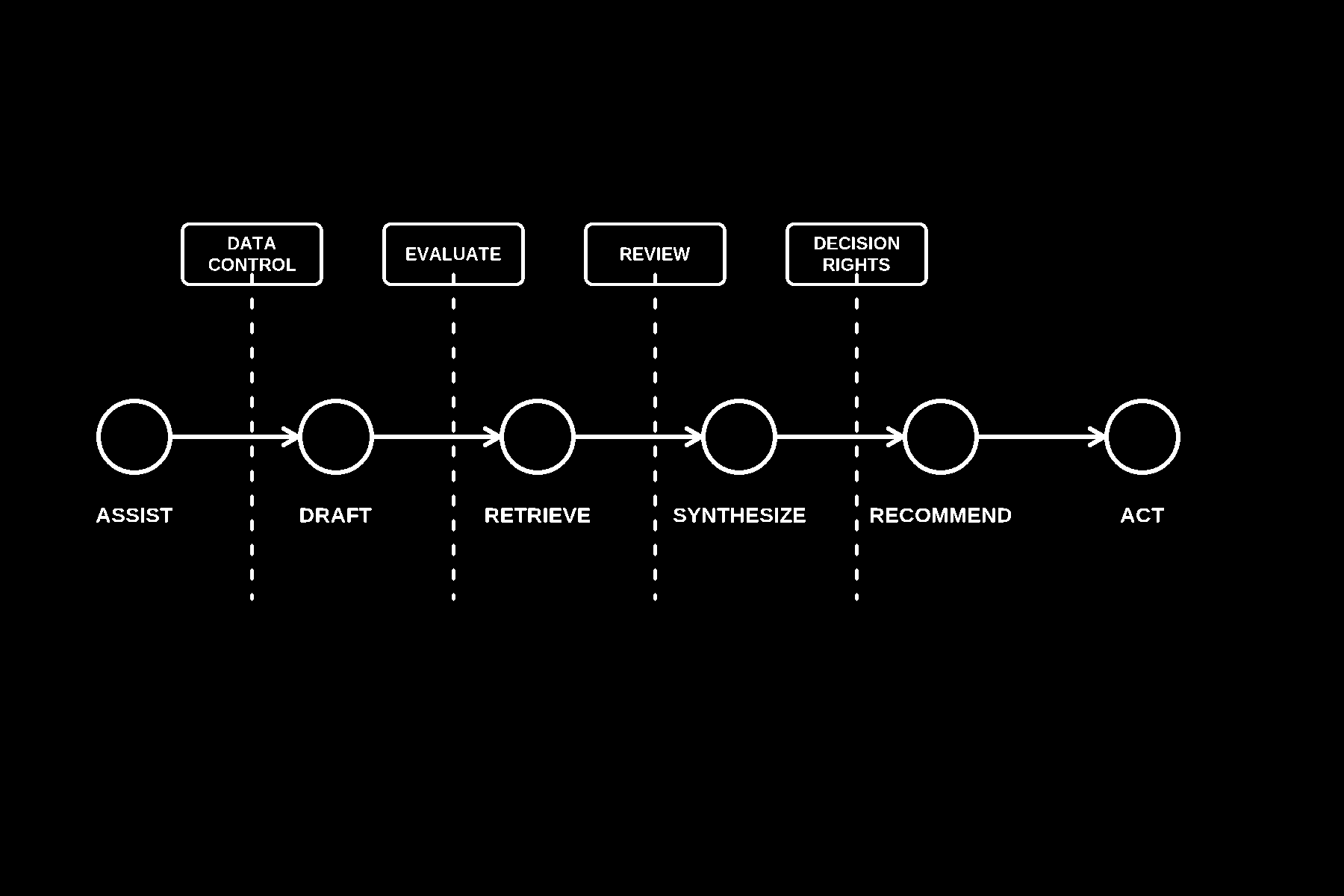
The frontier FOMO mistake
What not to chase.
The mistake is allowing model capability to outpace internal controls. Leaders approve AI pilots without defining task classes, data rules, evaluation, or decision rights. This creates unsafe delegation or broad slowdowns, preventing distinction between acceptable and unacceptable AI use.
Why the operating model lags
The structural break.
Frontier model preparedness is an operating model challenge, not just technology. Life sciences organizations, despite mature quality systems, are unprepared for models that retrieve, synthesize, draft, and shape decisions before human intervention.
First, task classification is broken. Generic labels like "AI for literature review" mask diverse risk. Extracting facts differs from ranking targets; summarizing protocols differs from recommending assays. Absence of clear task classes forces workflow-by-workflow negotiation.
Second, data control is broken. Life sciences data policies, designed for system access, fail with models cutting across boundaries. Retrieval systems, embedding stores, and prompts can expose sensitive data. Permissions for human browsing are inadequate for model-mediated synthesis.
Third, evaluation is broken. Focusing only on answer quality is insufficient. Evaluations must assess source preservation, conflicting data handling, citation, uncertainty escalation, and task refusal. This evaluation must also adapt to evolving model capabilities.
Fourth, review design is broken. "Human in the loop" fails without clear guidelines on review scope, evidence standards, reviewer authority, and escalation. Review gates must align with task type, data sensitivity, decision consequence, and acceptable error.
Fifth, decision rights are broken. Models influence decisions by structuring evidence or drafting memos. The governance question is: who allows a model to influence which decision, with what data, under what evidence standard, and with what review record?
Preparedness requires task-level governance, not panic, to absorb model improvements while controlling evidence, ownership, review, and accountability.
Preparing the substrate
How SignalForge stages readiness.
SignalForge defines preparedness for capable AI systems in life sciences. Work separates broad AI ambition from specific task handoffs: what models may assist, draft, retrieve, compare, recommend, trigger, or must never do unsupervised.
A Scan maps workflows where frontier models will exert pressure (e.g., literature synthesis, clinical ops summarization, BD diligence). This identifies where current governance is vague.
SignalForge then defines task classes and handoff boundaries. Tasks are approved as low-risk assistance, drafts, active review, monitored post-completion, escalated, or blocked, based on evidence type, data sensitivity, decision consequence, reviewer authority, and logging.
Advisory work also covers data controls. SignalForge inspects access rules against model behavior: retrieval scope, prompt contents, embeddings, vendor retention, and tool permissions. The question is whether model-mediated workflows should combine, infer from, summarize, or act on specific information.
For evaluations, SignalForge defines standards fitting life sciences. Models are tested against assay notes, incomplete metadata, conflicting studies, and hallucination traps. Evaluation includes answer quality, source faithfulness, abstention, escalation, confidence calibration, and decision impact.
For Run support, SignalForge maintains a senior cadence across preparedness decisions: new capabilities, vendor claims, workflow expansions, and unresolved risks. The aim is governable capability growth, not frozen adoption.
Preparedness targets
What gets examined.
SignalForge identifies where teams use or propose AI for assistance, drafting, synthesis, ranking, recommendation, monitoring, or action.
Data sensitivity by model access pattern
Review examines which data can enter prompts, retrieval systems, embeddings, logs, vendor environments, and agent tools.
Workflow decision points
SignalForge maps where model output could influence assay prioritization, target selection, clinical planning, or executive review.
Current review gates
Inspection tests if review steps have named owners, acceptance criteria, escalation triggers, and documented authority.
Evaluation standards
SignalForge assesses if evaluations include source faithfulness, scientific context, metadata handling, uncertainty, and refusal behavior.
Prompt and output logging
Review checks whether prompts, retrieved sources, model outputs, reviewer edits, and final decisions are reconstructible.
Tool and system permissions
SignalForge inspects if model-connected tools can act beyond the intended task boundary.
Vendor capability claims
Assessment compares vendor claims against internal evidence conditions, messy documents, and protected data.
Escalation and incident paths
SignalForge examines responses when a model produces unsupported recommendations, exposes sensitive context, or conflicts with SOPs.
Executive decision records
Review inspects whether leadership can see AI contributions, evidence used, reviewers, and final decisions.
Preparedness memo
What a Scan delivers.
A Frontier Model Preparedness Map identifies where capable models will impact current workflows.
A task classification framework for assistance, drafting, retrieval, synthesis, recommendation, monitored delegation, and blocked categories.
A data control matrix tied to model access patterns, not just user roles or system permissions.
A review gate and decision rights map identifying approval, review, escalation, and accountability.
An evaluation backlog detailing necessary tests before expanding model use in priority workflows.
A risk register covering sensitive data exposure, unsupported inference, vendor overreach, and decision contamination.
A first pilot or stop recommendation, based on control sufficiency for safe, bounded workflow testing.
A frontier capability trial
What a Pilot would prove.
A 2-8 week pilot could test model assistance for evidence memo generation in translational science or BD diligence.
SignalForge can evaluate model assistance for assembling evidence memos from approved sources. The model could extract claims, organize evidence, flag contradictions, and draft memo sections, but not recommend decisions or bypass reviewers.
The pilot tests task boundaries, retrieval scope, prompt controls, source citation, abstention, review workload, escalation, logging, and usability. This answers: can this model-assisted evidence work be governed, reviewed, and expanded?
Lean in, harden, or wait
The strategy fork.
This playbook helps leadership assess which workflows are safe for AI assistance, require strict human control, or should be blocked. Frontier model capability won't wait for policy maturity; teams will experiment, vendors will advance, and staff will seek AI help. Leadership needs practical choices: approve bounded assistance under controls, demand further evaluation, or block tasks with high handoff risk.
The avoided bad spend isn't just a failed pilot. It's buying platforms without knowing model permissions, funding agent workflows without defined escalation, or allowing AI summaries into executive decisions without evidence context. It's also blocking useful AI due to vague governance. Preparedness offers precise operating choices. Companies can accelerate where tasks are assistive, evidence-bound, logged, and reviewable. They can slow usage where workflows touch sensitive data, regulated interpretation, high-consequence decisions, or weak evaluation. They can say no where model delegation exceeds supervision capacity.
Preparedness FAQ
What leaders ask.
Is this about speculative AI risk?
No. This playbook focuses on practical operating readiness: task handoff, data access, evaluation, review, escalation, monitoring, and decision rights.
Do we need a complete AI governance program before running any pilots?
No. But pilots demand defined boundaries: tested tasks, data access limits, blocked actions, review processes, evidence standards, logging, and stop conditions.
Will this slow down AI adoption?
It slows incorrect adoption, accelerating proper use. Clear controls enable confident progress on low-risk assistive workflows while preventing uncontrolled expansion into high-consequence decisions.
Send this to begin
Frontier readiness context to share.
Share workflows where frontier models create pressure: current AI policies, vendor proposals, data access assumptions, sample SOPs/review templates, source materials, and prompt/model logs. Include leadership concerns regarding AI's influence.
Effective materials: assay summaries, anonymized ELN/LIMS exports, omics diagrams, SharePoint maps, evidence memo templates, BD diligence checklists, regulatory intelligence workflows, quality triage, and internal notes on permissible AI uses.